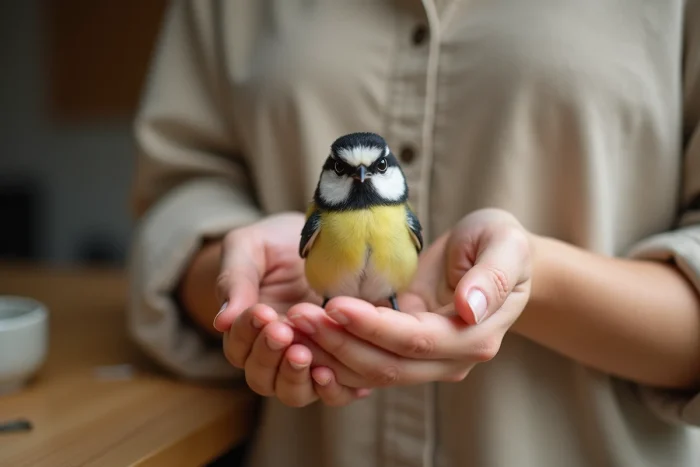
A great tit chick on the ground does not always require intervention. The majority of young great tit chicks rescued each spring did not need to be rescued. Before touching the bird, a quick diagnosis is necessary to avoid compromising its chances of survival by separating it from its parents.
Grounded chick: diagnosis in under two minutes before any intervention
A young great tit chick leaves the nest before it can fly. This normal phase lasts a few days during which the parents continue to feed it on the ground. Picking up a chick at this stage means removing it from its parents.
The first criterion to observe is the plumage. A chick covered in feathers, even short ones, with a beginning black cap and whitish cheeks, is likely a juvenile in the fledging phase. It hops, flaps its wings intermittently, and reacts vigorously to your approach. This profile does not warrant any intervention.
In contrast, a naked chick or one covered in sparse down, with closed or half-closed eyes, immobile and silent, is a nestling that has fallen prematurely. We recommend searching for the nest within a few meters, often in a tree cavity or a birdhouse. If the nest is accessible, replace the chick without hesitation: human contact does not cause parental rejection in passerines, whose sense of smell is very limited.
The third scenario: the chick shows a visible injury (drooping wing, blood, claw marks). Here, temporary care is justified, with a quick referral to a licensed rehabilitation center. The feeding and nourishment of the baby great tit is just one step in this care chain.
Suitable food for a great tit chick: only animal proteins
The great tit is insectivorous at the chick stage. Any diet based on bread, milk, seeds, or fruits is dangerous. The digestive system of a passerine chick does not tolerate complex carbohydrates or dairy products, which often cause fatal diarrhea.
Emergency foods
While waiting for transfer to a rehabilitation center, we can stabilize the chick with easily available protein foods:
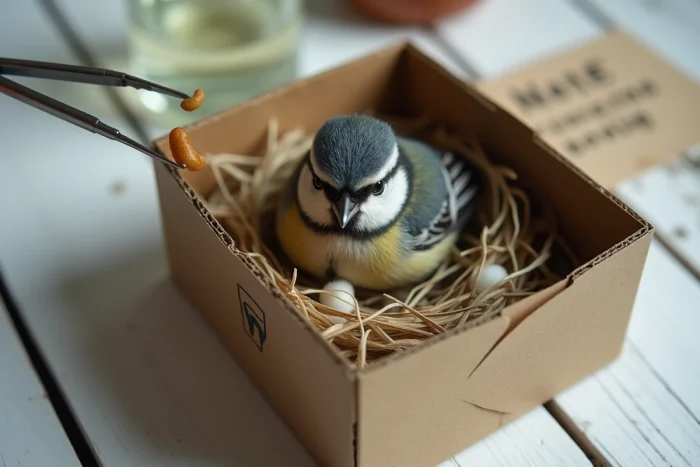
- Mealworms (larvae of the flour beetle), cut into small segments for the youngest chicks, given whole to fledged juveniles
- Crumbled hard-boiled egg yolk, usable in absolute emergencies when no insects are available, to be replaced as soon as possible
- Small spiders, aphids, flies captured without insecticide, which replicate the natural diet of the parents
Feeding technique and frequency
The food should be placed at the back of the throat with fine tweezers (like forceps), taking care not to pinch the tongue or damage the beak, which is still soft in very young chicks. A healthy chick will spontaneously open its beak as the tweezers approach.
If it keeps its beak closed, a slight lateral pressure at the commissure can help open it. We advise against insisting for more than a few seconds: a chick that stubbornly refuses food is likely hypothermic. The priority is then warming, not feeding.
The frequency of feedings varies with age. A naked chick demands food every twenty to thirty minutes during the day. A fledged juvenile can tolerate longer intervals, around an hour. No nighttime feeding: parents do not feed at night, and the chick is physiologically adapted to this fasting.
Hydration of a great tit chick: a common trap for amateur rescuers
Never pour water directly into a chick’s beak. The risk of aspiration is very high in passerines. Water can enter the airways and cause aspiration pneumonia within hours.
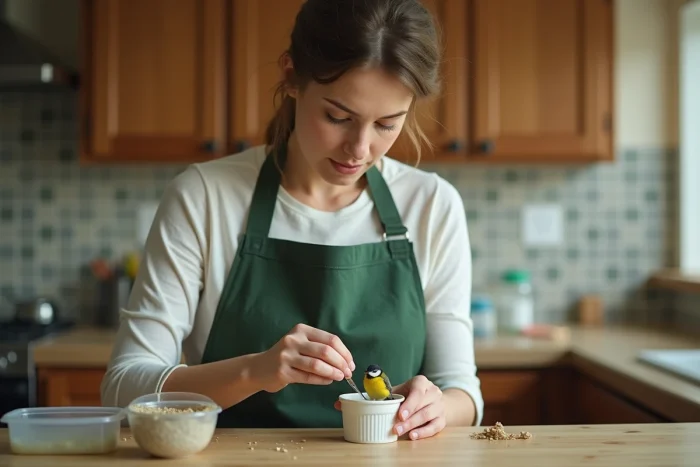
Hydration comes from the food itself. Live insects contain enough water to meet a chick’s hydration needs. In cases of visible dehydration (wrinkled skin, dry oral mucosa), a drop of water placed on the side of the beak, never inside, can be absorbed by capillarity. This technique requires precision that is best handled by a rehabilitation center.
Protection status and legal framework for rescuing a wild chick
The great tit is a strictly protected species in France. The possession, transport, and release of a wild specimen are regulated. An individual can temporarily rescue a distressed chick, but this care must remain time-limited.
The goal is not to turn a living room into a rehabilitation aviary. Emergency feeding is only meant to stabilize the chick while contacting a wildlife rescue center. Each year, we observe chicks kept too long by well-meaning individuals, who end up imprinted by humans and unable to reintegrate into their natural environment.
Thermal stabilization gestures
Place the chick in an opaque container (a cardboard box with a few holes) lined with a soft cloth like a washcloth. A warm water bottle under the cloth maintains a proper temperature. Avoid cotton, as its fibers can wrap around the legs.
After each feeding, the chick expels a droppings. We remove this with tweezers to keep the environment clean, just as the parents do in the nest.
Transfer to a licensed center remains the only option that offers the chick real chances of survival and return to the wild. Prolonged amateur feeding significantly reduces these chances.