
In France, interior decorating products (paints, varnishes, adhesives) must carry a label rating their emissions of volatile substances from A+ to C. This label, rarely mentioned in mainstream home décor guides, can change how you approach a home makeover.
Redecorating is about more than choosing a color or style: the materials you use, how many you combine in one space, and ventilation during the work all affect the air quality you breathe every day. So, transforming your home with accessible, on-trend décor ideas means setting a few practical criteria before buying anything.
Air quality and decorative finishes: what the label means
Repainting a wall is still the most common budget-friendly way to freshen up a room. It can be tempting to redo everything at once, from the living room to the bedroom. Using lots of new products over a short period increases the concentration of volatile organic compounds in indoor air.
Choosing A+-rated paints and tackling one room at a time reduces this exposure. Ventilating thoroughly during and after application remains the most effective precaution, whatever product you choose. These considerations needn’t stifle creativity: they simply encourage you to choose fewer, better finishes.
For finishes, furniture, and accessories that combine style with a manageable budget, specialist retailers such as deco-factory.fr offer a wide selection across different price ranges. It’s better to focus on an accent wall or a specific piece of furniture than to keep adding to your shopping list.
Rearrange before you buy: a zero-cost decorating trick
Most articles about interior decorating start with a list of products to buy. Yet the most cost-effective step comes first: rearranging what you already own.
Moving a piece of furniture from one room to another can completely change how a space feels. A bedroom dresser placed in the entryway, a study bookcase moved into the living room, or a bathroom mirror hung opposite a hallway window. These swaps cost nothing and can have the same impact as buying something new.
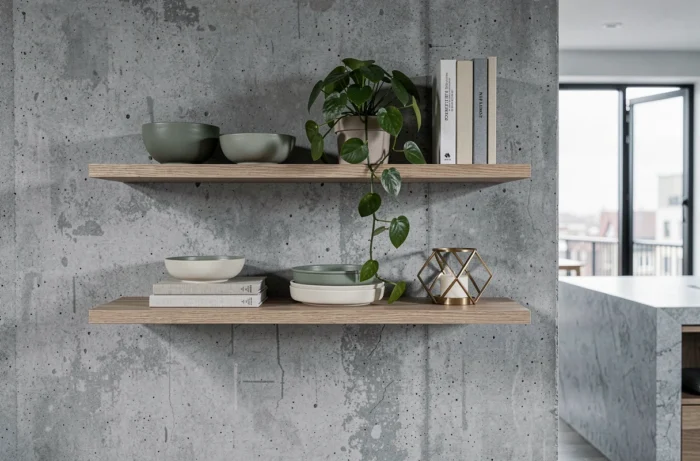
Decluttering displayed items can also make a big difference. A sideboard crowded with knick-knacks looks dated. The same objects, pared down to three well-spaced pieces, create a contemporary display. When you’re after a clean, on-trend look, removing things is often better than adding them.
Repair furniture instead of replacing it
A piece of furniture’s durability depends on more than its material or style. The availability of replacement parts and whether it can be taken apart determine how long it will really last. An armchair with a replaceable cover, a table with screw-on legs, or a modular bookcase for which you can buy a single shelf: these features matter more in the long run than the type of wood.
Before throwing away damaged furniture, check whether the manufacturer still offers spare parts. This can save you from buying new and extend the item’s useful life by several years. The same applies to light fixtures, drawer handles, and serving trolley wheels.
Secondhand décor: growing interest, but still a small share
Reusing decorative items is increasingly popular on resale platforms and at reuse centers. Frames, vases, mismatched dishes, and antique mirrors can add character to a home for a fraction of the price of new items.
Reuse still accounts for a very small share of the furniture industry, despite its growing visibility. The gap between consumers’ stated interest and the actual volume of items diverted from new purchases calls for a more nuanced view. Buying a vintage piece to complement your home is a great idea. Expecting secondhand shopping to furnish an entire home still runs up against limits in supply and availability.
Moveable decorative items or building materials: two different considerations
A frame found at a flea market or a vase bought at a reuse center raises no particular technical concerns. The situation is different for reclaimed materials incorporated into a building, such as old parquet flooring, salvaged tiles, or beams.
- Moveable decorative items (frames, light fixtures, dishes, textiles) can be reused freely, with no compliance requirements
- Materials incorporated into a building (flooring, wall coverings, joinery) may require checks on their origin and technical specifications to ensure compliance and insurance coverage
- Furniture falls somewhere in between: a freestanding piece has different requirements from a shelf fixed to a load-bearing drywall partition
Distinguishing between these categories can help you avoid problems if you need to make an insurance claim or sell your home.
On-trend colors and styles: choose what lasts
Home décor trends change quickly. The terracotta tones that were everywhere a few seasons ago are giving way to deep greens and warm beiges. Using a bold color on just one wall or one piece of furniture lets you embrace a trend without redoing everything when it passes.
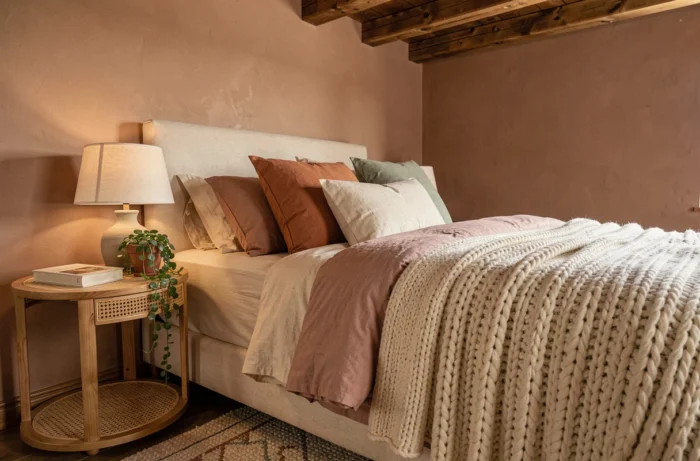
Cottagecore, inspired by our grandmothers’ homes (floral textiles, raw wood, vintage dishes), is gaining ground. One advantage is that it can be created largely with existing or thrifted items rather than new furniture.
- Choose neutral foundations (walls, large furniture) and save bright colors for replaceable accessories such as cushions, throws, and frames
- Test a paint color on a 50 cm square sample before committing to an entire wall
- Check the emissions label (A+ is preferable) before buying paint, varnish, or decorative plaster
A home that stands the test of time is built on choices you can undo. A painted wall can be covered in a day. Removing panoramic wallpaper pasted across all four walls requires a full renovation project. The affordability of a décor idea isn’t measured by its purchase price alone, but also by how much it will cost to replace when you no longer like it.
To transform your home without overspending or creating unnecessary waste, follow a simple order: rearrange first, repair next, and buy only as a last resort. Low-emission finishes and repairable items provide a more solid foundation than any fleeting trend.