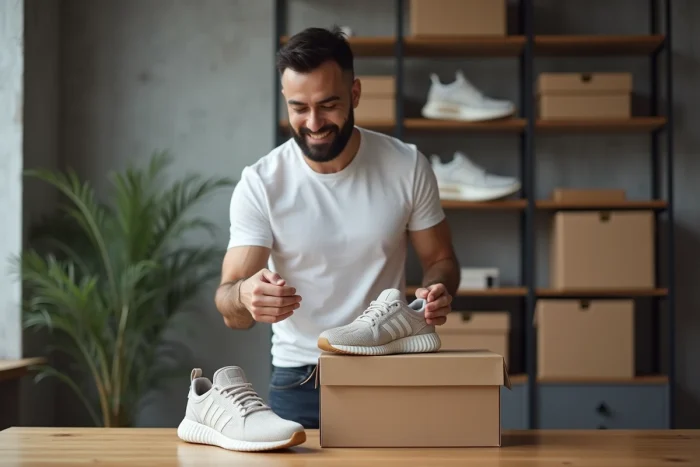
Retail and resell refer to two distinct distribution channels, but their boundaries have been blurring for several years. The former sells a new product to the end consumer, while the latter circulates a previously purchased item, sometimes at a price above its original cost. This coexistence alters price formation, brand strategies, and the tax framework applicable to sellers.
DAC7 Directive and resell taxation: what changes for sellers
The European DAC7 directive, transposed into French law since 2024, requires peer-to-peer resale platforms (Vinted, LeBonCoin, eBay) to transmit transaction data of their users to tax authorities. Beyond certain income thresholds, sellers must declare their earnings.
This obligation has concrete effects. Some occasional resellers abandon the activity or reduce their volumes to remain below the reporting thresholds. Others transition to a micro-entrepreneur status, changing their relationship with resell: they move from a decluttering mindset to a structured commercial activity, with associated social and tax charges.
To understand retail and resell in their current dimension, one must integrate this regulatory pressure. It pushes the resale market towards accelerated professionalization while reducing the pool of amateur sellers that supplied the platforms with volume.

Sneakers and sportswear: the price polarization between retail and resell
The sportswear market illustrates better than any other sector the tension between retail prices and resale prices. On certain limited collaborations (Nike x Off-White, Adidas Yeezy in their early days, Jordan retros in limited series), the resale price can reach several times the retail price within hours.
This mechanism relies on organized scarcity. Brands intentionally produce in reduced quantities to fuel desirability. Resell then becomes a parallel speculative market, with its own price indices (StockX, GOAT) and trading logics.
A speculative micro-market alongside a compressed mass market
The polarization is clear. On one side, a few “hype” references generate considerable margins for resellers. On the other, the mass market for sportswear remains highly competitive and margin-compressed, with moderate long-term growth. Resellers betting on common models often find themselves selling below retail price, absorbing shipping and commission fees.
This imbalance creates an illusion of accessibility. Many new entrants into sneaker resell discover that only a fraction of the references generates real profit, with the rest of the catalog selling at a loss or at cost price.
When retail brands integrate resell into their own model
The most structuring phenomenon in recent years does not come from third-party platforms, but from the brands themselves. Several retailers have launched their own programs for the buyback and resale of second-hand products, bypassing resell intermediaries.
- Nike Refurbished buys back and resells worn or returned pairs, with a grading system (like new, slightly used, visibly worn) and reduced prices accordingly
- Patagonia Worn Wear has been offering the resale of second-hand clothing directly on its site for several years, with guarantees and traceability
- Decathlon has set up a second life circuit for its products, accepting used items in-store in exchange for a voucher
These programs serve multiple simultaneous objectives. They capture part of the financial flow that was escaping brands through third-party resell. They enhance the image of environmental responsibility. And above all, they allow retailers to control the resale price of their own products, limiting speculation in the secondary market.
The limits of vertical integration of resell
The integration of resell by brands raises unresolved operational questions. The logistical management of second-hand products (unit quality control, refurbishment, differentiated storage) is more expensive than distributing new products. Field returns vary on the actual profitability of these programs: some retailers maintain them mainly as an image lever, without achieving financial balance.
Moreover, integrated circularity does not eliminate independent resell. The most sought-after references continue to exchange on StockX or Vinted at prices that brand programs cannot capture, as these focus on used products, not on new products resold before opening.
Consequences on the physical retail and e-commerce market
The development of resell modifies purchasing behavior in traditional retail. Some consumers now buy in-store or online with the intention to resell, not to wear or use. This phenomenon, documented in the sneaker sector but also in consumer electronics during limited releases, skews the sell-through indicators of retailers.
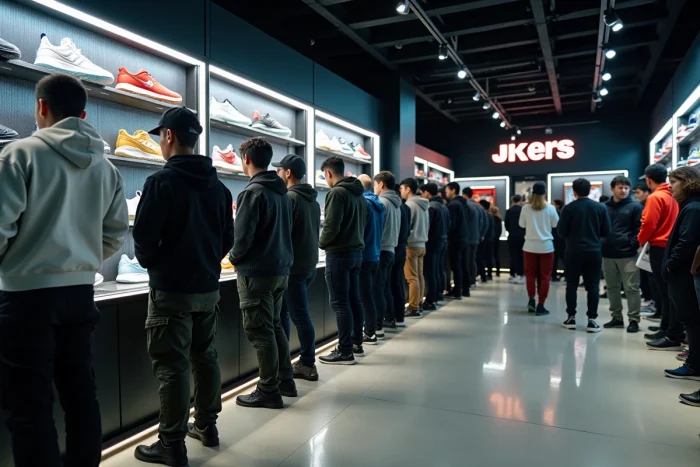
For physical retail, which is already going through a difficult period (textiles and furniture have been particularly suffering since 2024 according to observations from economic activity tribunals), resell represents both a competitor and a traffic accelerator. Limited edition drops attract crowds in-store, but part of this traffic has no intention of final consumption.
On the e-commerce side, the boundary between retail purchase and purchase for resale becomes invisible in the data. Direct sales platforms and marketplaces coexist in the same ecosystem, making the analysis of consumption flows more complex for brands trying to manage their distribution.
The current market operates at two speeds. Traditional retail seeks to retain consumers whose purchasing power is stagnant, while resell captures value in segments where scarcity creates margin. The available data does not yet allow for precise measurement of how much resell subtracts from direct retail revenue, but the coexistence of these two channels is permanently reshaping the rules of retail trade.