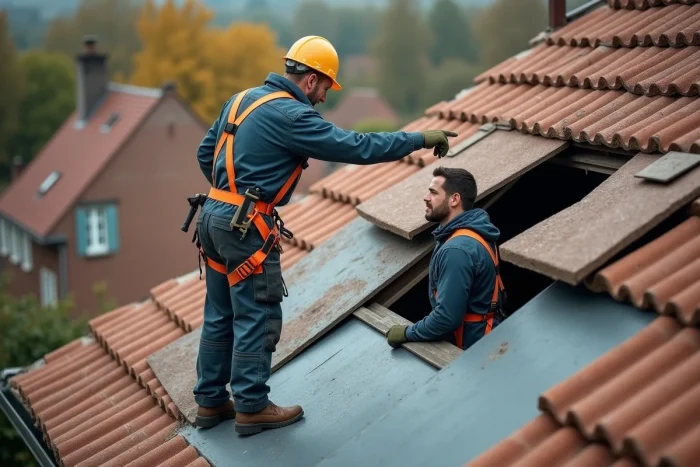
A poorly insulated roof allows a significant amount of heat produced by heating to escape. On-site, it is observed that the first energy renovation works almost always concern the attics, because this is where the investment-to-comfort gain ratio is most evident. Here are ten concrete tips, based on site feedback, for effectively insulating your roof and sustainably reducing your energy bill.
1. Conduct a thermal diagnosis before touching the framework
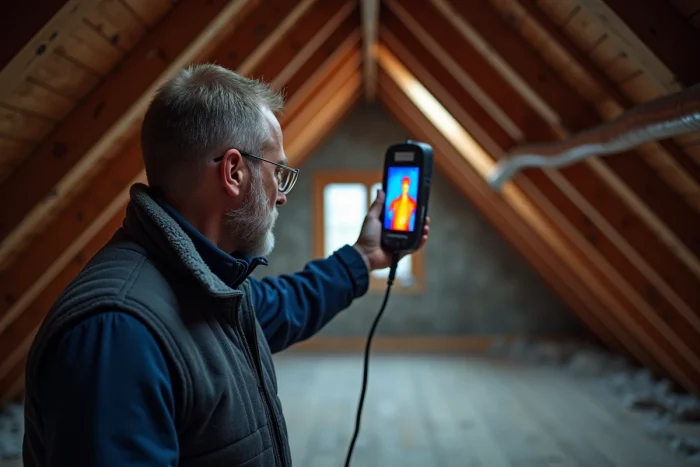
We see too many sites where insulation is installed without knowing precisely where the losses come from. A thermal diagnosis (infrared camera or air tightness test) locates thermal bridges, air leaks at the eaves, duct passages, and wall-to-roof junctions.
This identification prevents over-insulating an area that is not problematic and neglecting a hidden defect. It is also the time to check the condition of the framework: installing insulation on degraded wood compromises the entire renovation.
To delve deeper into the subject, you can find tips for properly insulating your roof that detail the preparatory steps of an insulation project.
2. Distinguish between lost attics and converted attics to choose the right method
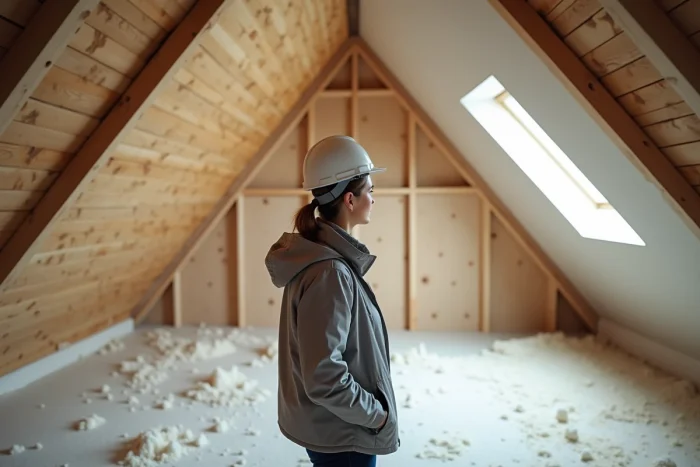
The insulation technique directly depends on the use of the attic. Lost attics are treated by blowing or rolling out insulation on the attic floor, which is quick and inexpensive. Converted attics require insulation under the slopes, which is more technical and more expensive.
Insulating as close as possible to the heated volume remains the basic rule. If the attic is not inhabited, insulating the floor rather than the under-roof limits the volume to be heated and improves overall energy performance.
3. Compare bio-sourced insulations to mineral wools for summer comfort
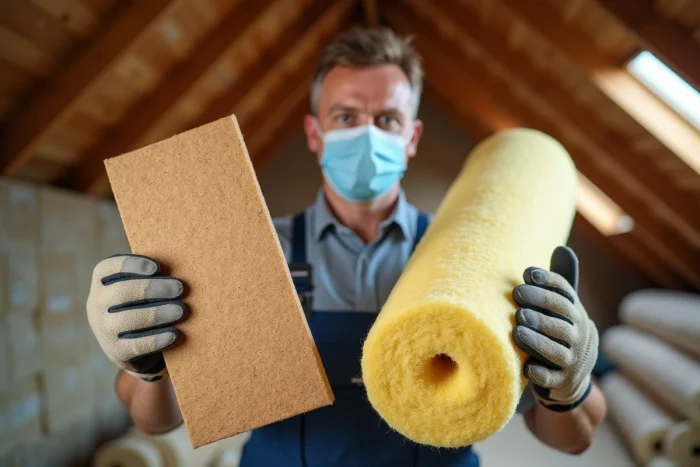
Glass wool and rock wool dominate the market due to their accessible price. However, feedback from sites in recent years shows that bio-sourced insulations (wood fiber, cellulose wadding, hemp) offer better thermal lag.
Specifically, under a south-facing roof, a bio-sourced insulation delays the penetration of summer heat by several hours compared to a mineral wool of equivalent thermal resistance. This is a criterion not to be overlooked in regions where summer overheating becomes a recurring problem.
4. Address thermal bridges at wall-to-roof junctions
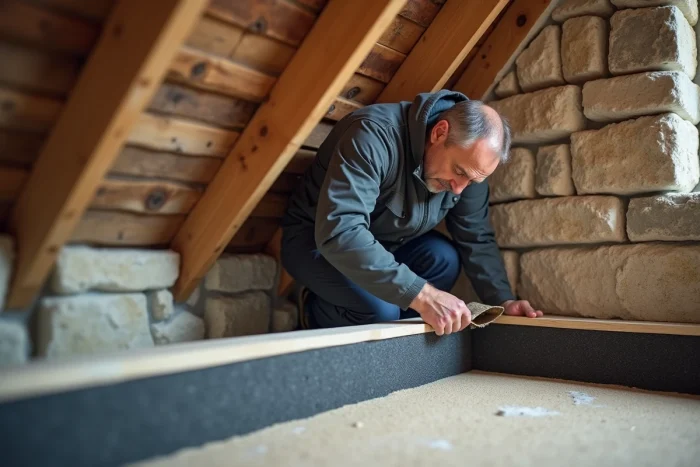
You can install the best insulation on the market under the slopes, but if the junction between the load-bearing wall and the roof remains untreated, warm air will find a way out. These linear thermal bridges are responsible for often underestimated losses.
The solution involves returning insulation over the top of the wall or using thermal bridge breakers. On renovation sites, this step is often forgotten because it requires difficult access to the corners of the framework.
5. Install a vapor barrier on the interior side to prevent condensation
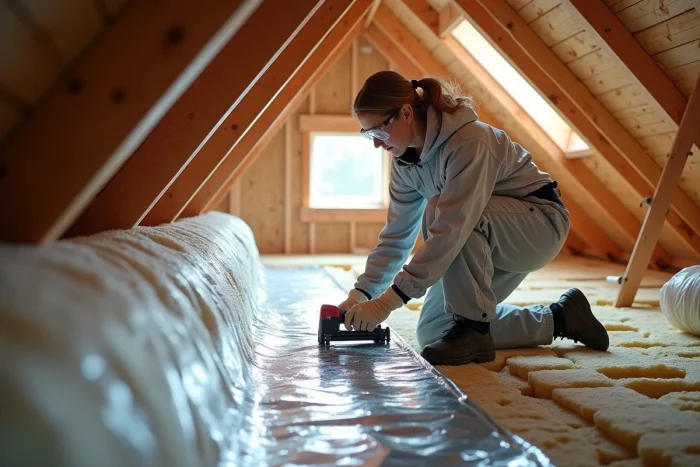
The humidity produced by occupants (kitchen, shower, breathing) migrates outward through the walls. Without a properly installed vapor barrier on the warm side, this water vapor condenses in the insulation, reducing its performance and risking damage to the framework.
The vapor barrier is always installed on the interior side, without discontinuity. Each joint must be taped with an appropriate adhesive. A punctured or poorly sealed vapor barrier loses a significant part of its effectiveness.
6. Check the ventilation of the under-roof before closing
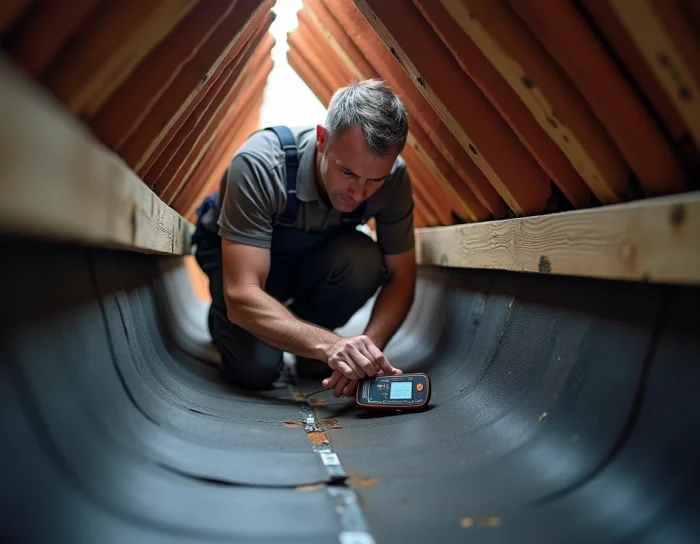
Insulating without ventilating causes serious issues: mold, wood rot, degradation of the covering. A ventilated air gap between the insulation and the covering allows residual moisture to escape to the outside.
On older roofs, it is sometimes observed that the air inlets at the bottom of the slope and the outlets at the ridge are blocked. They must be restored before installing any insulation panels.
7. Aim for a thermal resistance that meets regulatory requirements
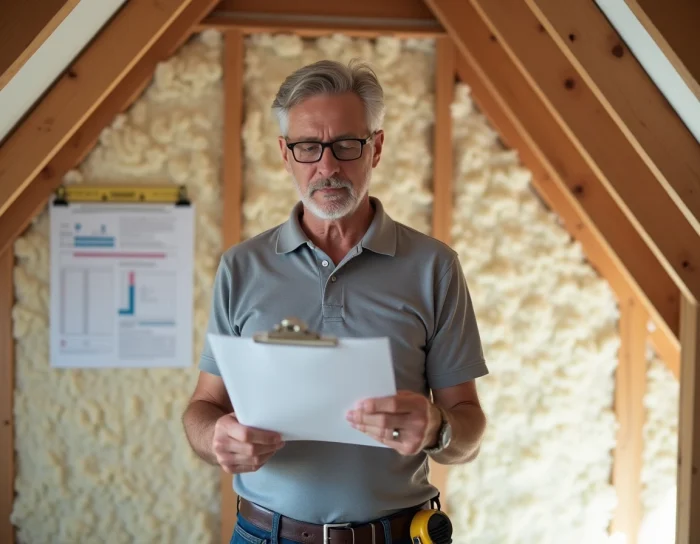
The thermal resistance (noted R) measures a material’s ability to slow down the passage of heat. To benefit from financial aid for renovation, a minimum threshold of R must be reached, which varies according to the type of attic and the climatic zone.
On the ground, feedback varies on this point, but aiming for a value above the regulatory minimum remains good practice: the additional cost in insulation thickness is marginal compared to the performance gain over the building’s lifespan.
8. Seal the passages of ducts and conduits
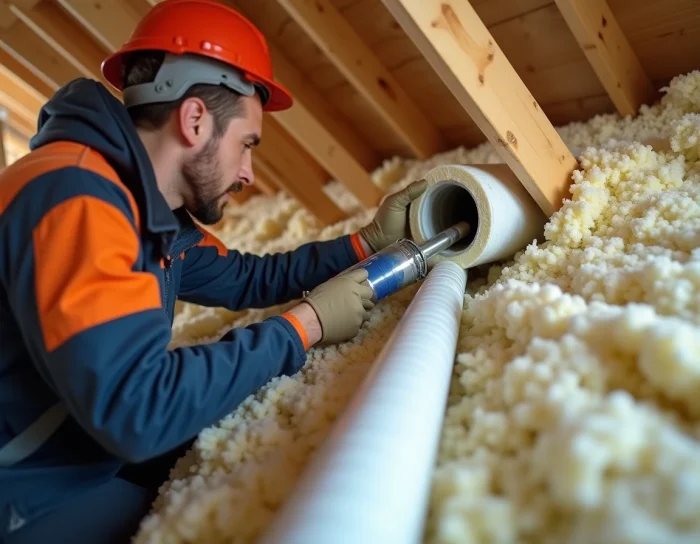
Each roof penetration (chimney flue, ventilation duct, electrical cable) creates a break in the insulating layer. These singular points generate unwanted air leaks that reduce the overall efficiency of the insulation.
Specific sleeves, fireproof collars around flue ducts, and appropriate sealant for flexible ducts allow for clean sealing of these passages. Neglecting the airtightness of singular points can negate part of the expected gain.
9. Anticipate the DPE and the ban on renting thermal sieves
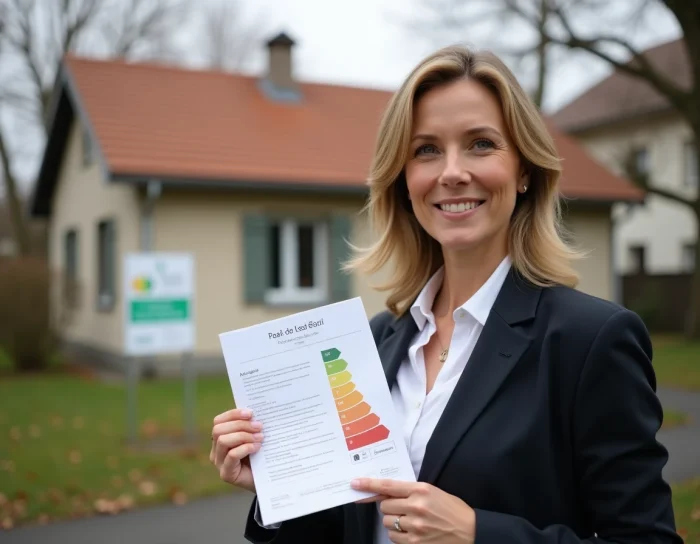
The Climate and Resilience Law gradually prohibits the rental of housing classified G and then F in the DPE. Roof insulation is the most direct lever to improve the energy rating of a single-family home.
Since 2023, an energy audit is mandatory before the sale of housing classified F or G, a requirement that will be extended to better-rated classes in the coming years. Insulating the roof now protects the property’s heritage value against these regulatory deadlines.
10. Hire a certified RGE craftsman to access financial aid
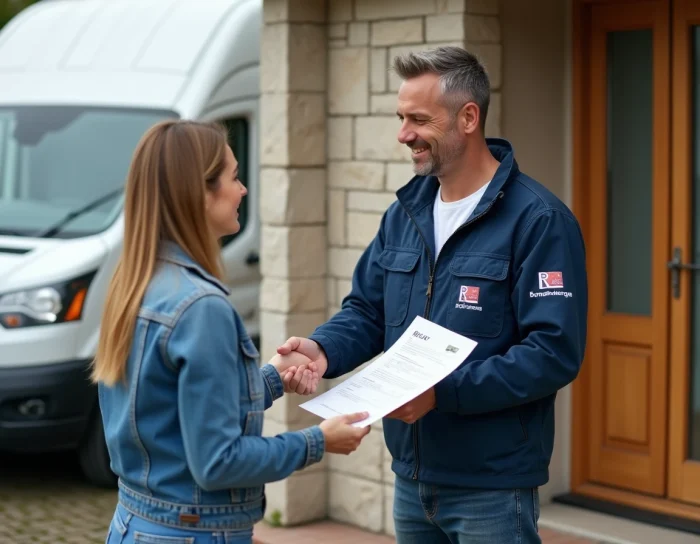
MaPrimeRénov’ and energy savings certificates (CEE) condition their payment on the intervention of a certified RGE professional (Recognized Guarantor of the Environment). Without this certification, roof insulation work does not qualify for any public aid.
Beyond access to aid, RGE certification commits the craftsman to comply with best practices:
- Checking the condition of the framework and covering before intervention
- Implementation in accordance with the manufacturer’s insulation specifications (thickness, continuity, treatment of junctions)
- Installation of the vapor barrier and maintenance of the ventilation of the under-roof
Comparing several RGE quotes also helps identify significant price discrepancies for equivalent services. A detailed quote mentions the targeted thermal resistance, the type of insulating materials, and the treated surface area, which facilitates comparison.