
You take a paracetamol tablet for a headache, and a few minutes later, you feel dizzy, sweaty, and weak. Your first instinct: blame the medication. Vasovagal syncope and paracetamol are often associated in online searches, but the physiological reality is more nuanced than this spontaneous association suggests.
Paracetamol and Blood Pressure: What the PATH-BP Trial Shows
Most articles on the subject focus on the vasovagal syncope itself. Few address a well-documented point: paracetamol can alter blood pressure, and not necessarily in a downward direction.
The PATH-BP clinical trial, published in the journal Circulation, tested the intake of paracetamol at a dose of one gram four times a day for fourteen days in adults with hypertension. The result was surprising: systolic blood pressure increased significantly compared to placebo. In other words, regular and prolonged use of paracetamol tends to raise blood pressure, not lower it.
This finding contradicts the common belief that a vasovagal episode (drop in blood pressure) would be caused by the paracetamol itself. To better understand the link between vasovagal syncope and paracetamol, it is necessary to distinguish between two very different mechanisms: the drug’s effect on long-term blood pressure and the acute vagal reaction related to the context of taking it.

Vasovagal Syncope After Taking Medication: Context Matters More Than the Molecule
The vagus nerve regulates heart rate and the diameter of blood vessels. When it is excessively stimulated, it causes a slowing of the heart and dilation of the vessels. Blood pressure drops sharply, the brain lacks blood: this is vasovagal syncope.
Have you noticed that a fainting spell occurs more easily when you are tired, fasting, or in an overheated room? These factors directly affect the vagus nerve. Moreover, taking medication often coincides with these same circumstances.
Common Triggers When Taking Paracetamol
Taking a tablet generally implies that you are already feeling unwell. Fever, pain, fatigue, dehydration: these pre-existing symptoms are themselves triggers for vasovagal syncope. Paracetamol comes afterward, not before.
- Intense pain (migraine, toothache) stimulates the vagus nerve long before the medication is absorbed.
- Fever leads to dehydration, which promotes orthostatic hypotension, especially when standing up too quickly.
- The stress related to the illness episode itself (anxiety, fear of a diagnosis) can be enough to trigger a vasovagal syncope.
Paracetamol alone is not identified as a direct cause of acute hypotension or syncope. The confusion arises from the fact that taking the medication and the malaise occur within the same time frame, creating a false cause-and-effect relationship.
Drug Combinations and Real Risk of Blood Pressure Drop
If paracetamol alone does not cause vasovagal syncope, certain combinations change the game. Tablets combining paracetamol and codeine deserve special attention.
Codeine is a mild opioid. It causes vasodilation (widening of blood vessels) and can lead to orthostatic hypotension, especially in cases of dehydration. The official DailyMed sheet for paracetamol-codeine combinations explicitly mentions the risk of syncope among the side effects, especially when combined with other central nervous system depressants.
How to Distinguish Vasovagal Syncope from a Drug Side Effect
The distinction is not always obvious, but a few guidelines help clarify:
- A classic vasovagal syncope is accompanied by warning signs: blurred vision, hot flashes, nausea, a feeling of “black veil.” It lasts from a few seconds to a few minutes, and recovery is quick.
- A drug side effect may include persistent symptoms: repeated vomiting, prolonged confusion, marked pallor without improvement when lying down.
- The French RCP for paracetamol warns of the risk of pyroglutamic acidosis in malnourished individuals, chronic illness patients, or those on certain treatments. The symptoms (nausea, vomiting, pallor, malaise, sweating) resemble a vasovagal syncope but warrant prompt medical advice.
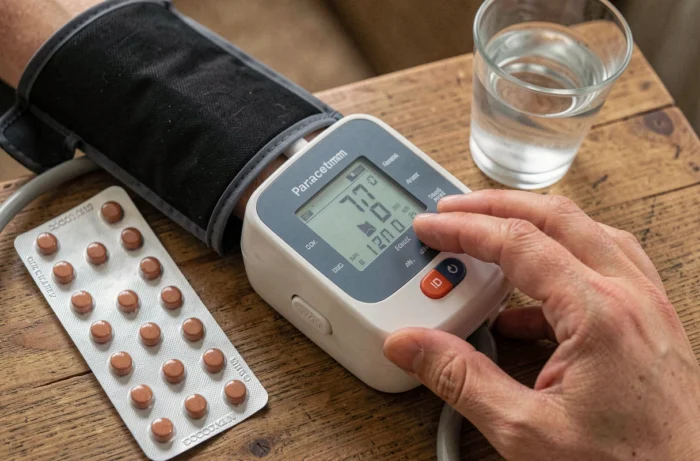
Blood Pressure and Fainting: Why a Single Measurement Is Not Enough
You took your blood pressure just after an episode of malaise and the number displayed worries you? Recent recommendations emphasize a point often overlooked: a single measurement during or just after a malaise is not reliable.
Blood pressure fluctuates constantly. During a vasovagal syncope, it drops sharply before rising again within minutes. Taking your blood pressure at that precise moment provides a snapshot that does not reflect the true state of the cardiovascular system.
For individuals alternating between episodes of high blood pressure and dizziness or fainting, home monitoring (self-blood pressure measurement) or 24-hour ambulatory monitoring offers a much more reliable overview. This approach allows for distinguishing between true hypertension, potentially exacerbated by regular paracetamol use, and simple blood pressure variability related to stress or standing position.
Vasovagal syncope remains, in the vast majority of cases, a benign episode. Paracetamol, taken occasionally and at recommended doses, is not the direct trigger. However, prolonged use at high doses can influence blood pressure upwards, which requires different medical monitoring. When a malaise occurs after taking a medication, the right question is not “what pill did I take?” but rather “what was my condition before taking it?”.